How Technology Reshaped My Hollywood Career
A personal essay on creative technology, career reinvention, and learning to love the edit by Nicholas Don Vito
I Swore I Would Never Be an Editor
Back in the late 1980s, I was a film and television student at Chapman College ( later University) with a camera on my shoulder and a clear vision of where I was headed — and it was nowhere near an editing room. I directed and edited several of my own films as a junior and senior, and I helped other students cut their projects too. I understood editing. I respected it. But I did not love it. At least, not the physical reality of it.
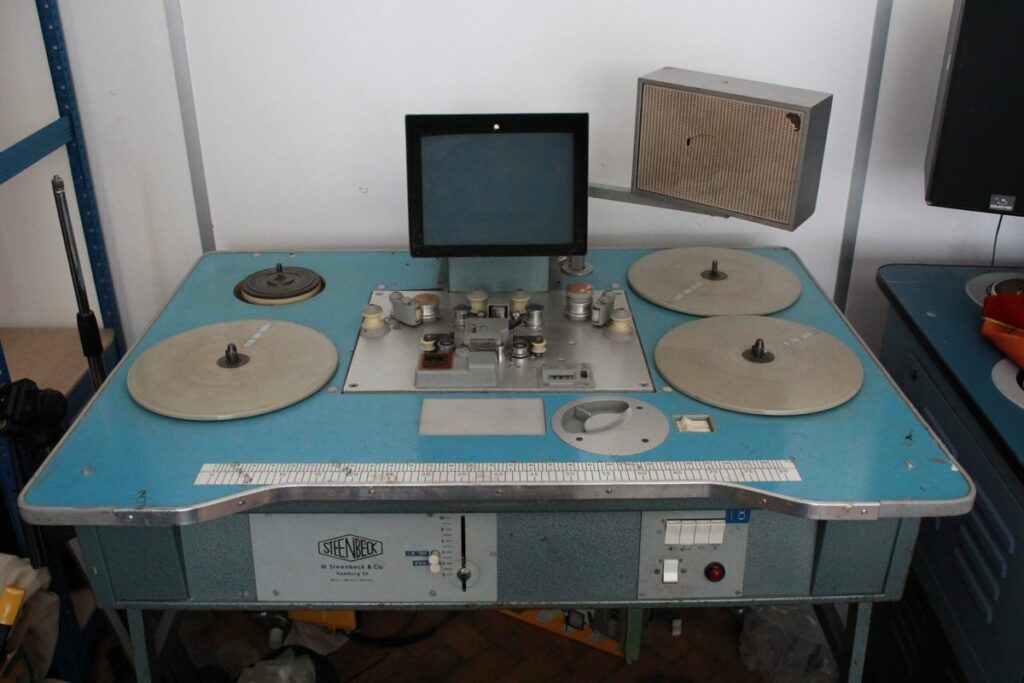
The tools of that era were the upright Moviola and the flatbed Steenbeck — editing consoles that required you to work directly with the film itself. Every cut was a physical act. You trimmed frames with a blade, managed the offcuts carefully, and if you changed your mind, you had to find those trims and splice the film back together. The splice itself became its own enemy: a bump in the celluloid that would catch and stutter every time it fed through the gate. One bad splice could derail an entire screening.
Television editing was equally daunting. Operating an edit console and a switcher felt less like creative work and more like flying an airplane — a maze of buttons, decks, and timecode windows that demanded technical fluency before you could even think about storytelling. The creative impulse kept getting buried under the mechanics of the machine.
I graduated with a firm conviction: I would work in this industry, but I would not be an editor. I had other plans.
The Long Way Around
The years after graduation took me through many corners of the business. I worked as an art director, shaping the visual world of productions. I worked as a camera assistant, learning how images were really made from the ground up. I worked as a production assistant, doing whatever needed to be done. Each role gave me a different lens on how film and television actually worked — not just creatively, but logistically, technically, collaboratively.
I also was given opportunities to direct commercials, infomercials, music videos and corporate training and marketing.
While I was moving between those roles, something important was happening on the technology side of the industry. Non-linear editing systems — NLEs — were emerging and rapidly maturing. Instead of working with physical film, editors could now work with digitized media stored on hard drives. You could make a cut, undo it instantly, try something different, and never touch a razor blade. No more trims on the floor. They stayed in a bin on your screen, always available, always retrievable.
The most influential of these systems was Avid Media Composer. I made the decision to learn it — and that decision quietly changed everything.
The Machine That Changed My Mind
Learning Avid felt different from anything I had experienced in the editing room as a student. The friction that had made traditional editing feel oppressive — the physical permanence of every cut, the fragility of every splice — was simply gone. On the Avid, the timeline was fluid. Creativity could move at the speed of thought. If a scene wasn’t working, you could restructure it in minutes rather than hours. You could experiment freely because nothing was ever truly destroyed.
The part of editing I had always loved — the storytelling, the rhythm, the way two shots in sequence could create an emotion that neither contained alone — was suddenly accessible without the punishing overhead. For the first time, editing felt like what I always suspected it could be: pure creative work.
I began cutting commercials, infomercials, and corporate marketing projects. The work was varied and fast-paced, and it demanded that I develop instincts for pace, clarity, and persuasion. Every project sharpened skills I didn’t know I was building. Avid became second nature. And as it did, something shifted in how I thought about my career.
Hollywood, and the Birth of Reality TV
By the late 1990s and early 2000s, I had made my way to Hollywood. And I arrived at an extraordinary moment. Reality television was being born — a format that would reshape the industry and create an enormous demand for fast, skilled, story-driven editing.
Reality TV is, at its core, an editor’s medium. You shoot enormous volumes of unscripted footage and your job is to find the story buried inside it. You assemble characters, build arcs, create suspense, generate emotion — all from raw material that no writer pre-shaped for you. It is demanding, instinctive work. And it turned out to be exactly the kind of editing I was built for.
None of that would have been possible without digital non-linear editing. The volume of footage that reality television generates would have been unmanageable on a Moviola. The speed at which episodes need to be turned around, the flexibility required to restructure a story at a producer’s request, the ability to try ten different versions of a scene and present them for review — all of it depended on the technology that had been quietly evolving while I was building my career on the other side of it.
An Emmy, and a Full-Circle Moment
Starting in the late-90’s, I edited some of the biggest, most-watched unscripted shows including Survivpor, The Apprentice, Star Search, Unsolved Mysteries, The Voice, The Bachelor and Bachelorette, Selling Sunset, Love is Blind and many more.
In 2024, I won an Emmy Award for editing NBC’s The Voice, Season 24.
I think about that graduating senior who stood in the editing room, frustrated by splices and razor blades and timecode, and made a promise to himself: not this. Not editing. And I think about how wrong he was — or rather, how right the instinct was, and how wrong the conclusion. He wasn’t rejecting editing. He was rejecting the limitations of the technology available to him at the time.
When the technology changed, everything changed. The creative act of editing — which I had always understood and felt drawn to, even when I claimed otherwise — was finally liberated from the mechanical burden that had hidden it. And when I found it again, in a different decade with different tools, it turned out to be the work I was meant to do all along.
The lesson I carry from this is a simple one, but it took a career to learn it: sometimes what feels like a closed door is really just a door that hasn’t been built yet. Technology has a way of opening rooms that didn’t previously exist. The job is to keep moving, keep learning, and stay close enough to the work you love that you’re ready when the room finally opens.
I’m glad I stayed close.
Leave a Reply